Slow Down to Win More: How Game Speed Is Quietly Burning Through Your Bankroll
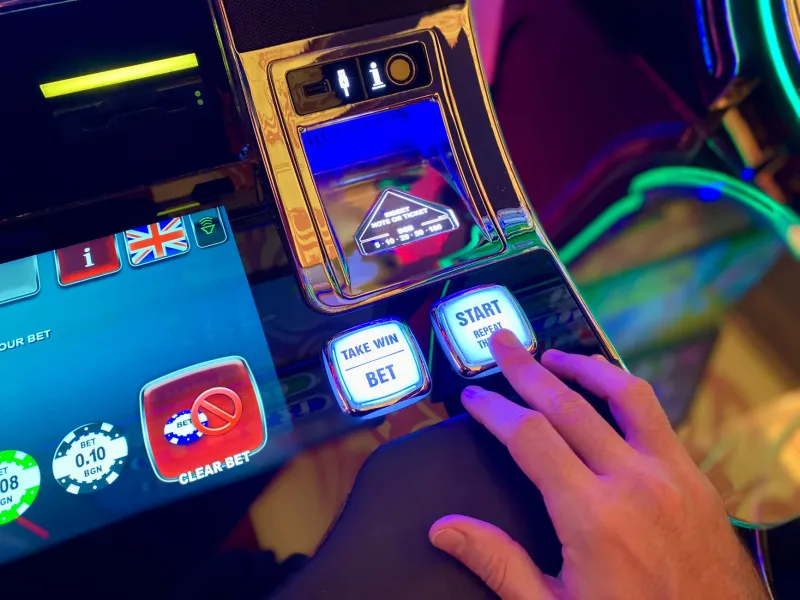
Imagine two players. Both sit down with $300. Both are playing games with identical house edges. One walks away after two hours with most of their bankroll intact. The other is reaching for their wallet 45 minutes in.
The difference? Game speed.
It's one of the least discussed variables in gambling, and one of the most financially significant. Casino games aren't just designed with a mathematical edge — they're designed with a pace that determines how quickly that edge compounds against your stack. Understanding this relationship changes how you think about every session.
The Hourly Burn Rate Nobody Calculates
Here's the formula every serious player should internalize:
Expected loss per hour = (House edge) × (Average bet) × (Hands/spins per hour)
The house edge gets all the attention. The hands-per-hour number gets almost none. But those two variables multiply together, which means game speed is just as powerful as the edge itself in determining how fast your money goes.
Let's run some real numbers.
Modern video slots can process 400-600 spins per hour when a player is clicking through without pause. At a $1 bet per spin and a 6% house edge, that's an expected loss of $24-$36 per hour. Doesn't sound catastrophic — until you realize most players aren't betting $1 a spin, and the speed makes it easy to play for hours without noticing how much has moved.
Video poker runs fast too — 400-500 hands per hour is common for an experienced player — but a well-played 9/6 Jacks or Better game carries a house edge under 0.5%. At $1.25 per hand (max coin on a quarter machine), expected loss runs around $2.50-$3.00 per hour. The speed is similar. The edge is radically different.
Live dealer blackjack — either at a physical table or through an online live dealer platform — typically runs 50-80 hands per hour with a full table. Playing basic strategy, you're looking at a house edge around 0.5%. At $15 per hand and 60 hands per hour, expected hourly loss is roughly $4.50. That same bet size on a fast solo slot session would cost you 6-8 times more per hour.
The casino knows these numbers. The question is whether you do.
The Decision Fatigue Multiplier
Game speed doesn't just accelerate the mechanical math — it degrades the quality of your decisions, which makes the real-world math even worse than the theoretical numbers suggest.
Decision fatigue is a well-documented psychological phenomenon. The more decisions you make in a short period, the worse your subsequent decisions become. Your brain is genuinely depleted by the cognitive work of choosing, evaluating, and responding repeatedly under time pressure.
For slots, this barely matters — there's no decision to make beyond bet size and spin frequency. But for games where strategy matters — blackjack, video poker, even sports betting live wagering — speed is the enemy of accuracy.
A blackjack player who takes time to think through each hand plays closer to the theoretical 0.5% house edge. A player rushing through 200 hands per hour at a heads-up electronic table, making snap decisions, might effectively play at 2-3% due to strategic errors. The game feels the same. The cost is dramatically higher.
Some sportsbooks have introduced rapid in-game betting markets that update in near real-time during games. The excitement is real. So is the risk of making poorly considered bets simply because the clock is ticking and the moment feels urgent.
How Casinos Engineer the Pace
This isn't accidental. Game designers, both physical and digital, understand the relationship between speed and revenue. Several intentional elements push game pace higher:
Autoplay features on slots remove even the brief pause of clicking the spin button. Players using autoplay consistently log more spins per hour than manual players — sometimes 20-30% more — without any sense of the accelerated pace.
Elimination of physical cues in digital gaming removes the natural rhythm breaks that physical games include. In a live casino, there's a dealer shuffling, chips being moved, players making decisions. Online, those pauses are compressed or eliminated entirely.
Near-miss programming in slots creates a visual urgency that encourages immediate re-spins. The near-miss isn't just psychologically compelling — it speeds up the session by reducing the pause between spins.
Rapid-fire side bet prompts at digital table games encourage additional decisions per hand, compounding both the pace and the house edge (side bets almost universally carry higher edges than the base game).
Practical Strategies for Controlling Your Pace
Choose the right game format. Live dealer games — whether in a casino or through an online live dealer platform — are the single most effective pace regulator. The human dealer creates natural rhythm. You can't rush a live dealer. For players who enjoy table games, this format offers both engagement and built-in speed control.
Set a manual spin rule. If you're playing slots, disable autoplay and commit to manually clicking each spin. Even a two-second pause between spins cuts your hourly spin count significantly. That alone can reduce expected hourly losses by 15-20% without changing anything else.
Use timed breaks deliberately. Set a phone timer for 30-minute intervals. When it goes off, stop — not to quit necessarily, but to stand up, step away from the screen for five minutes, and reassess. This breaks the momentum that fast-paced games deliberately build.
Track hands, not just money. Most players monitor their bankroll during a session but not their hand count. Knowing you've played 200 hands in an hour at a game where 80 is the relaxed pace tells you something important about how you're playing.
Match game speed to your strategic capacity. If you're tired, avoid fast-paced strategy games. Exhausted decision-making on a heads-up blackjack machine is worse than playing a slower game with a slightly higher base edge. The strategic errors will cost you more than the edge differential.
The Counterintuitive Truth About Slow Play
There's a persistent myth that playing faster is somehow more efficient — that you're "getting more action" for your money. In gambling, more action is rarely your friend. More action means more exposure to the house edge, more decisions made under fatigue, and less time to recognize when you should walk away.
The players who stretch $200 into a four-hour entertainment experience aren't playing more hands. They're playing fewer, more deliberate ones. They're choosing games with natural pacing built in. They're treating speed as a variable they control, not one the game controls for them.
At BWFun88, bold play means informed play. And one of the boldest, most underrated moves you can make is simply slowing down — choosing a live dealer table over a solo slot session when your bankroll needs to last, recognizing when rapid-fire games are costing you more than the fun is worth, and understanding that the house edge printed on the game description is only part of the story.
The other part is how fast you let it run.