Teaser Traps and Prop Pitfalls: The Real Math Behind Sportsbooks' Flashiest Bets
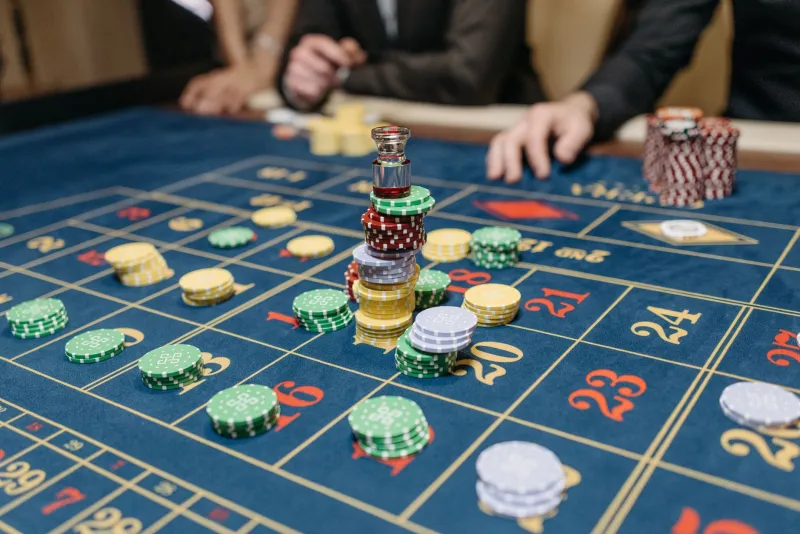
Open any major sportsbook app on a Sunday morning and you'll be buried in options. Player props. Game props. Teasers. Round robins. Alternate spreads. It's a buffet of betting opportunities, and the variety is genuinely exciting for US bettors who want something beyond a straight point spread.
But here's the thing about buffets: not everything on the table is worth eating.
Some of these alternative bet types carry house edges that would make a Vegas casino floor blush. Others are genuinely usable tools when applied correctly. The difference between the two is almost never obvious from the odds display — you have to dig into the math. And that's exactly what we're doing here.
What a "Vig" Actually Costs You
Before we get into specific bet types, let's establish the baseline. Every sportsbook makes money through the vigorish (vig), also called juice — the built-in margin on every wager. On a standard -110/-110 spread bet, the book takes roughly 4.5% of every dollar wagered over time.
That's your comparison point. Any bet type with a higher implied margin than that is costing you more per dollar risked. And many alternative bets are significantly worse.
Teasers: Buying Points at a Steep Price
A teaser sounds appealing on paper. You get to move the spread in your favor — typically 6 or 6.5 points in football — in exchange for reduced payout odds. Instead of betting two teams at -110 each on a parlay, you might tease them both and get -120 or worse on the combined play.
Here's a real example. Say you want to tease two NFL favorites:
- Team A from -7 to -1 (6-point teaser)
- Team B from -8.5 to -2.5
You're paying -120 for this two-team teaser. That means you risk $120 to win $100.
For a two-team teaser to break even at -120, each individual leg needs to win roughly 52.4% of the time — same as a standard spread bet. But wait, you moved the spread by 6 points, so shouldn't your win rate be much higher?
In theory, yes. In practice, it depends heavily on which numbers you're crossing. Moving through 3 and 7 in NFL football (the two most common margins of victory) is genuinely valuable. Moving from -8.5 to -2.5 and missing both of those key numbers? You've bought points that don't do much work.
Academic research on teaser betting (notably work by Professors Rockerbie and Rodney) suggests that the "Wong Teaser" strategy — teasing through 3 and 7 specifically in NFL games — can produce a slight positive expectation under the right conditions. But this is a narrow edge case, not a general rule, and sportsbooks have largely adjusted their lines in response to sharp teaser action.
For most recreational bettors teasing random games without targeting key numbers, the effective house edge on a two-team 6-point teaser can climb to 8–10% or higher. That's twice what you'd pay on a straight bet.
Proposition Bets: Entertainment Pricing
Player props are one of the fastest-growing bet categories in US sports betting, and for good reason — they're engaging, they give you a rooting interest in individual performances, and they make watching a backup running back's carry count suddenly feel consequential.
But prop markets are also where sportsbooks operate with some of their widest margins.
Consider a typical NFL player prop:
- Patrick Mahomes passing yards: Over 287.5 (-115) / Under 287.5 (-115)
At -115/-115, the implied margin is about 6.5%. Already worse than a standard spread. But that's one of the tighter props you'll find.
Now look at a touchdown scorer prop:
- Player X to score a TD anytime: +200
If the true probability of that player scoring is, say, 28%, the fair odds would be around +257. At +200, the book is paying you out at a significantly discounted rate — the effective margin on that single bet could be 15% or more.
Game props get even wilder. "Will there be a defensive touchdown?" "What will the first scoring play be?" These markets are often priced with 15–20% house edges because the books know that recreational bettors are paying for novelty and entertainment, not value.
Alternate Spreads: Where It Gets Sneaky
Alternate spread markets let you buy a bigger cushion (or take a shorter price on a tighter line). They look flexible. They feel empowering. The math is usually brutal.
Example: The standard spread is Chiefs -3 (-110). You want more cushion, so you move to Chiefs -1 (-200). You're now risking $200 to win $100.
For this to make sense, the Chiefs need to win by more than 1 point at a rate that justifies -200 implied odds — meaning roughly 66.7% of the time. Does moving from -3 to -1 actually give you that kind of edge? Almost never.
The books build these alternate lines with wide margins specifically because they know bettors find them emotionally appealing. Paying for certainty feels good. It usually isn't worth the price.
When (If Ever) Do These Bets Make Sense?
Here's a fair, honest take: not all alternative bets are dead money all the time.
Teasers through key numbers in NFL games can carry genuine value, but only when you're deliberately crossing 3 and 7 and getting reasonable juice. If your book is charging -130 or more for a standard two-teamer, the math likely doesn't work.
Player props on well-researched matchups can occasionally offer value, particularly early in the week before sharp money has moved the lines. If you've done real homework on a defensive matchup and believe a receiver's yardage prop is mispriced, there's a case to be made.
Exotic props and game props are almost purely entertainment products. Bet them if you enjoy them, but budget accordingly — treat them like a ticket to a show, not a vehicle for profit.
Play Bold, But Know What You're Buying
At BWFun88, we're not here to tell you which bets to avoid entirely. Variety is part of what makes sports betting genuinely fun, and there's real value in understanding the full menu of options available to you.
But fun and smart aren't mutually exclusive. Knowing that a random player prop carries three times the house edge of a spread bet doesn't mean you can't make that bet — it means you make it with your eyes open, budgeting it accordingly rather than treating it as your primary wagering vehicle.
The sportsbook's job is to make every option look equally attractive. Your job is to know the difference.